

Disclaimer
The views, opinions, and content expressed on this website are solely those of Rosabel Zohfeld, based on her personal and professional experience, and do not reflect the views of, nor are they affiliated with, any hospital, healthcare facility, medical practice, or organization.
All information shared here is for educational and informational purposes only and should not be taken as medical advice. Nothing on this website creates a doctor-patient relationship between Rosabel Zohfeld and any visitor. Visitors should always consult with a qualified healthcare professional regarding any medical concerns or decisions.
By accessing this website, you acknowledge and agree that Rosabel Zohfeld is acting in her individual capacity and not as a representative of any institution or employer.
Everything most people have been told about the aging brain is incomplete. A stimulated mind can grow stronger, form new connections, and expand available mental capacity—what neuroscientist Dr. Tommy Wood calls “headroom”—at any age. Cognitive changes many interpret as inevitable decline often signal missing inputs rather than destiny. Neuroscience shows the brain remains capable of adaptation well into the 80s and 90s when given the right conditions.
Prefer to watch? Here’s the full episode.
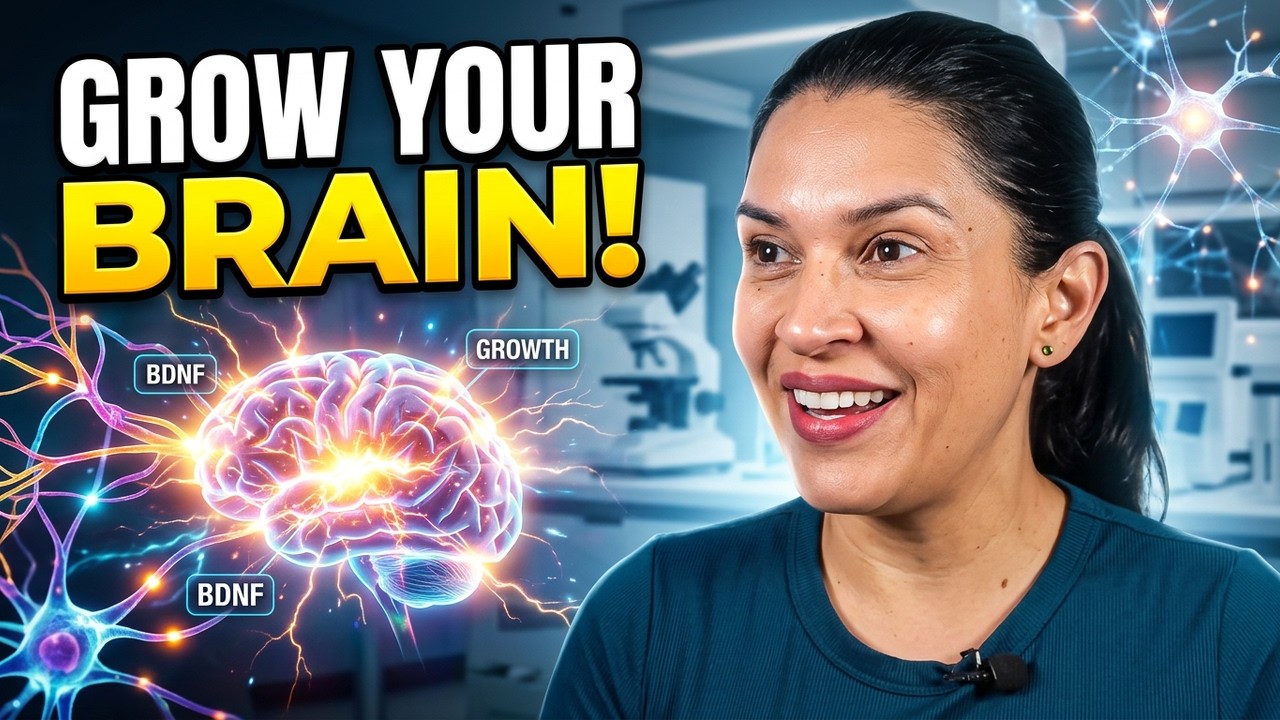
This article is based on a monologue by Neurology Nurse Practitioner Rosabel Zohfeld, drawing on the research of Dr. Tommy Wood, Associate Professor of Pediatrics and Neuroscience at the University of Washington. Wood’s framework, detailed in his book The Stimulated Mind, centers on three controllable pillars that create a stimulated mind capable of long-term resilience.
The information here is educational only. It is not medical advice, diagnosis, or treatment and does not create a provider-patient relationship. Always consult your own healthcare professional for personal decisions.
Why the Aging Brain Declines Without a Stimulated Mind
Many adults notice difficulty recalling names, reduced focus, or slower processing and immediately fear dementia. The underlying assumption is that aging itself is the cause. Research shows a different picture. When the brain lacks genuine challenge, consistent recovery, and the nutrients required for maintenance, function declines. That is depletion, not destiny.
Neuroplasticity research over the past two decades overturned the old view that the adult brain is largely fixed after early adulthood. The same regions involved in learning and memory continue to form new connections when conditions allow. Elite athletes in their forties often maintain high cognitive sharpness because their brains stay under constant demand—new techniques, real-time problem-solving, and adaptation. Someone of the same age who has run the same routines for decades experiences far less stimulation and often shows earlier decline. Age and genetics alone do not explain the difference. A stimulated mind does.
Long-term observational data support this. Adults with higher lifetime cognitive enrichment show substantially lower risk of Alzheimer’s dementia and delayed onset of mild cognitive impairment. One analysis found each unit increase in lifetime enrichment associated with roughly 38 percent lower risk of Alzheimer’s dementia. The protection holds even after accounting for pathology, pointing to genuine cognitive resilience built through years of engagement. You can read more about these lifelong enrichment findings in the MedPage Today summary of the research.
The Stimulated Mind 3-S Model Explained
Dr. Tommy Wood’s 3-S model—Stimulation, Sleep, and Nutrient Supply—describes what the brain needs to thrive across the lifespan. These pillars interact. Stimulation creates the demand for adaptation. Sleep and nutrient supply provide the recovery and raw materials that allow new connections to stabilize. The same actions that help prevent later dementia also optimize function at 30, 60, or 80. Full details appear in The Stimulated Mind available on Dr. Tommy Wood’s official book page.
Stimulation: Real Challenge Builds a Stimulated Mind
Brain-training apps and repetitive puzzles rarely deliver meaningful protection. Real stimulation requires novelty and effort. Learning a new skill, language, instrument, movement pattern, or deep work on a complex problem activates brain-derived neurotrophic factor (BDNF). BDNF acts as fertilizer for neurons, strengthening synapses and supporting growth.
When a task is already mastered, the brain expends less energy and forms fewer new connections. The demand must be genuine. Elite performers stay sharp partly because their environments continuously present novel problems. Everyday people do not need elite training loads; they need consistent, meaningful challenge that keeps the stimulated mind active. Lifelong cognitive engagement correlates with better outcomes decades later precisely because it repeatedly calls on this adaptive machinery.
Sleep: The Construction and Cleanup Phase of a Stimulated Mind
Sleep is not downtime. It is the period when the brain consolidates learning into long-term storage and performs essential maintenance. During deep sleep the glymphatic system becomes highly active. Cerebrospinal fluid flow increases substantially, clearing metabolic waste including amyloid-beta, a protein linked to Alzheimer’s pathology. Recent human studies confirm that normal sleep enhances overnight clearance of amyloid and tau markers into plasma compared with sleep deprivation. See the Nature Communications research on glymphatic clearance of amyloid beta and tau for the detailed findings.
Chronic short sleep or irregular schedules elevate dementia risk. Consistency matters as much as total hours. An irregular pattern of eight hours one night and five the next disrupts circadian systems more than a steady six-hour schedule. The brain is built for rhythm. Protecting seven to nine hours in a dark, cool environment with limited evening screen exposure is foundational maintenance, not luxury. No amount of daytime stimulation or perfect nutrition fully compensates for chronic sleep debt.
Nutrient Supply: Building Blocks for a Stimulated Mind
The brain represents about 2 percent of body weight yet consumes roughly 20 percent of energy and nutrients. It requires omega-3 fatty acids for membrane integrity, B vitamins for neurotransmitter production, minerals for signaling, choline for acetylcholine, and amino acids for protein synthesis. Ultra-processed diets often supply excess inflammatory oils and refined carbohydrates while starving the brain of these components.
Patterns resembling the Mediterranean diet—fish, leafy greens, nuts, olive oil, eggs, and minimal processing—are consistently associated with better cognitive trajectories. Consistency over decades outweighs short-term perfection. Whole foods provide the supply the stimulated mind needs to respond to challenge and recover during sleep. Expensive nootropics are rarely required when the dietary foundation is solid.
Three Practical Actions That Create a Stimulated Mind Starting Today
These steps are deliberately simple and sustainable.
- Choose one genuinely new skill or deep-work project and practice it consistently. The novelty activates BDNF and expands capacity. Commit to regular sessions rather than perfection.
- Lock in a consistent sleep schedule: same bedtime and wake time, including weekends, aiming for seven to nine hours. Remove screens 30–60 minutes before bed and keep the room dark and cool. Rhythm supports glymphatic clearance and memory consolidation.
- Shift daily eating toward whole foods rich in omega-3s, B vitamins, minerals, and healthy fats. Prioritize fish, leafy greens, eggs, nuts, and olive oil. Focus on long-term pattern rather than daily perfection.
These three actions work together. Stimulation creates demand. Sleep and nutrient supply enable the adaptation that builds headroom. The result is not merely prevention of decline but measurable optimization of the stimulated mind at every life stage.
Cognitive Decline Is Not Destiny—A Stimulated Mind Is Within Reach
Many people express the same fear: “I can’t remember names the way I used to. Am I losing my mind?” The more accurate framing is that something essential has been missing. Missing inputs can be restored. Depleted systems can be replenished. Genetics and chronological age set a background, but daily choices determine the trajectory.
A stimulated mind is not the product of exotic biohacks or rare genetics. It is the predictable result of providing challenge, recovery, and building blocks. The research from lifelong cognitive engagement studies, glymphatic clearance work, and BDNF mechanisms converges on the same message: the brain remains responsive when the conditions are right.
For deeper reading on the science of stimulation and headroom, explore Dr. Tommy Wood’s book The Stimulated Mind: Future-Proof Your Brain from Dementia and Stay Sharp at Any Age on his official site or via Penguin Random House. Additional background on Dr. Wood’s research appears on his University of Washington-affiliated profile and personal about page.
Continue Building Your Stimulated Mind
If these ideas shift how you view your own brain, take the next step. Visit rosabelzohfeld.com for free resources and the free Understanding Dementia course at rosabelzohfeld.com/understanding-dementia.
Your brain is worth the investment. The actions that create a stimulated mind are available starting today. Choose one pillar, begin consistently, and give your aging brain the conditions it needs to adapt and strengthen.


Free for new subscribers
Get Module 1 of my dementia course free
Plus my weekly email: one clear, science-based idea for your brain and the people you care for. Unsubscribe anytime.