

Disclaimer
The views, opinions, and content expressed on this website are solely those of Rosabel Zohfeld, based on her personal and professional experience, and do not reflect the views of, nor are they affiliated with, any hospital, healthcare facility, medical practice, or organization.
All information shared here is for educational and informational purposes only and should not be taken as medical advice. Nothing on this website creates a doctor-patient relationship between Rosabel Zohfeld and any visitor. Visitors should always consult with a qualified healthcare professional regarding any medical concerns or decisions.
By accessing this website, you acknowledge and agree that Rosabel Zohfeld is acting in her individual capacity and not as a representative of any institution or employer.
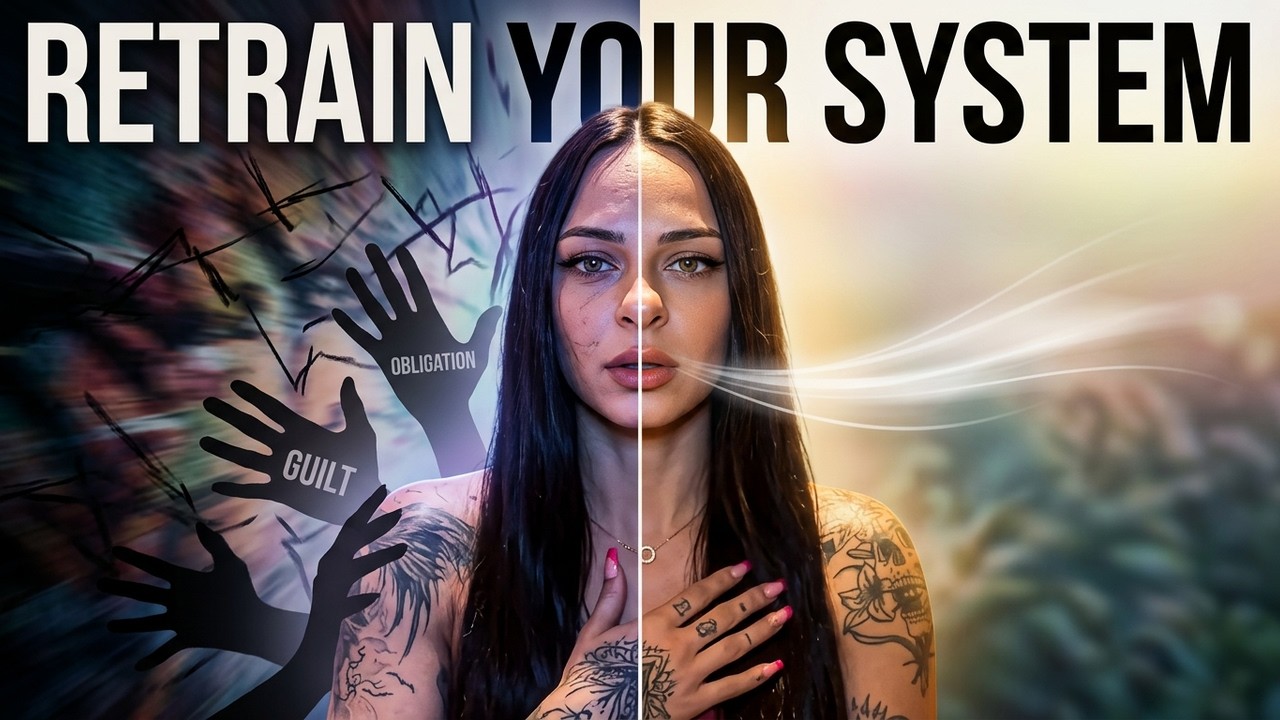
You can retrain your nervous system without forcing positivity, becoming someone else, or spending years talking in circles. That is the core message licensed clinical therapist Liz Chelak shared on Rosabel Unscripted. If you have ever said yes when every part of you wanted to say no, then replayed the moment for hours, the problem is not that you are broken. It is a nervous system pattern. And you can retrain your nervous system with simple, consistent practices.
Prefer to watch? Here’s the full episode.
Liz Chelak, LCSW, CCTSI, CRPS, is the founder of Evolve Therapy and Counseling in Miami and West Palm Beach and the creator of the Sovereign Body Method. For years she tried to become the “acceptable” version of a therapist. She followed rules, sought approval, and kept her tattoos, colorful hair, facial piercings, and pole dancing carefully separated from her professional identity. The turning point came when the energy required to hide became heavier than the risk of being seen. The people who left were simply not a good fit. The ones who stayed made space for her to show up as one whole person.
That same gap between knowing and doing appears in almost every client she works with. People know they should set the boundary, leave the job, or have the hard conversation. They understand their patterns. Yet they still freeze. Insight alone does not retrain your nervous system because the body is still running an old threat program.
Why Insight Alone Cannot Retrain Your Nervous System
The brain and nervous system are wired for survival. When you experienced criticism, rejection, or lack of safety earlier in life, your system learned to scan constantly for danger. Later, a delayed reply, a disapproving look, or the possibility of disappointing someone can trigger the same physiology even when no real threat exists.
Liz explains the physiology clearly. Stressful experiences release adrenaline and cortisol. Heart rate climbs. Breathing turns rapid and shallow. Muscles tighten so the body can fight, flee, or freeze. When those experiences accumulate, the body can remain stuck in that braced state. You may know intellectually that you are safe. Your shoulders, chest, jaw, or hands still do not receive the message.
This is why people-pleasing, chronic self-doubt, and what looks like self-sabotage continue. They began as strategies that reduced threat. The true feelings get suppressed because the body does not yet feel safe enough to express them. Talk therapy can help you understand the “why.” Many clients already know the why. What they need is a practical way to retrain your nervous system so the body can finally catch up to the insight.
The Sovereign Body Method gives therapy structure. Sessions are not endless weekly recaps followed by validation. Therapists trained in the method equip clients with simple tools they can use between appointments. The aim is not lifelong dependence on a therapist. The aim is sovereignty: an inner knowing of what is right for you, paired with a body that feels safe enough to act on it. In short, the method is designed to help you retrain your nervous system in daily life, not just in the therapy room.
How Past Stress Prevents You From Being Able to Retrain Your Nervous System
When the body stays braced, even positive experiences can register as dangerous. Liz’s team teaches clients to feel safe not only with difficult emotion but with good things happening—rest, success, being liked for who they actually are. Uncertainty, rejection, and change can all feel like threats if the system is still living in the past.
This is not a fixed personality. It is a conditioned response. The same stress cascade that once protected you can keep you locked in patterns long after the original danger has passed. You do not have to retell every traumatic memory in order to retrain your nervous system. Liz is trained in EMDR and uses it when it is a good fit. She also believes that requiring someone to narrate trauma without a clear processing intervention can be harmful. There are body-based ways to work that do not demand repeating the story. That decision always belongs to the client and therapist together.
Resistance is expected. The brain prefers the familiar, even when the familiar is uncomfortable. Attempting something new can feel more threatening than staying stuck. That is another reason people delay the very practices that would help them retrain your nervous system.
5 Daily Practices That Help You Retrain Your Nervous System
Liz is clear about one non-negotiable rule: do not begin these practices when you are already flooded, when your boss is yelling, or when you are about to have the hard conversation. Practice when you are already relatively safe so the body can pair the sensation of release with actual safety. That pairing is what allows you to retrain your nervous system over time.
Here are five practices drawn directly from the conversation.
1. Drop Awareness From Mind to Body and Consciously Release Tension
For ten to twenty seconds, notice where you are holding. Shoulders, chest, back, hands, jaw. Soften that area on purpose. Scan the rest of the body. Repeat several times a day when conditions are easy. With repetition, the nervous system begins to associate that released state with safety. This simple check-in is one of the most reliable ways to retrain your nervous system.
2. Use an Extended Exhale
In real danger, breathing is rapid and shallow. A longer exhale than inhale is a signal the brain can interpret as “we are not being chased.” Breathe in, then let the exhale last longer while you release tension. Liz favors this practice because the science is straightforward and easy to remember. If breathing work does not feel right for you, simply choose another sense-based practice.
3. Pair a Sense You Already Enjoy With Clear Intention
Ask which of the five senses helps you settle. Pet the cat you already pet, but add the intention of feeling the softness and dropping tension. Use lavender if smell is your doorway. Use music or a calming visual. The specific tool is less important than regular, low-effort repetition. Consistency is what allows you to retrain your nervous system.
4. Practice When It Is Easy, Not When It Is Hard
This is the instruction most people overlook. The rewiring happens in ordinary moments: first thing in the morning, sitting at home, a brief pause between tasks. You are teaching the body what safety actually feels like so that later, when stress arrives, you have more capacity instead of living in chronic tightness. Practicing in calm moments is essential if you want to retrain your nervous system effectively.
5. Check the State of Your Body Before You Analyze the Story
Liz’s core takeaway is that the state of the body influences thoughts, feelings, and behavior. Several times a day, drop awareness downward: What is the body doing? Where is the tension? Soften it. Then you have more space to feel fear, sadness, or anxiety inside a relaxed body, receive the information the feeling carries, and let it move. This daily habit is a direct way to retrain your nervous system without adding more mental effort.
It is less about finding the perfect technique and more about how often you do something simple. The same principle of repetition that locked in the old pattern can lock in a new one. That is how you retrain your nervous system in real life.
How the Sovereign Body Method Supports Your Ability to Retrain Your Nervous System
The method is not linear. Clients move back and forth depending on where they are. It always begins with regulation. It also expands capacity both for stress and for the positive experiences many people cannot yet tolerate. Liz’s own story is living proof. She stopped performing a split identity. She stopped hiding the parts that did not match a conventional therapist image. She is, in her words, a better therapist because of those parts, not in spite of them. Many people want that same consolidated self.
People are not broken. They developed patterns that once helped them feel safe. Those patterns can change. You can retrain your nervous system. Personality is not fixed in the way many of us were taught.
If you live in Florida, Evolve Therapy and Counseling’s therapists are licensed in the state and accept most insurance. Liz personally offers a free fifteen-minute consultation to understand what you are looking for, explain the method, and match you with a therapist if it is a good fit. Sessions are available in person in the Miami Brickell, West Palm Beach, and Boca Raton areas and online for Florida clients.
Take the Next Step to Retrain Your Nervous System
If this conversation showed you that the late-night replay is your nervous system doing what it learned long ago—not proof that you are weak—take one small next step.
Visit the practice website and book the free consultation at Evolve Therapy and Counseling. You can also read more about Liz Chelak on her Psychology Today profile. Follow her work on Instagram at @lizchelak and the practice at @evolve.therapy.counseling.
For more conversations that connect real nervous system science with honest lived experience, visit Rosabel Zohfeld, grab the free resources at rosabelzohfeld.com/rosabelievers, and get a copy of the memoir The Courage To Succeed: A True American Dream on Amazon or Audible.
The moment you stayed silent does not mean you failed. It means the old circuit ran. You can retrain your nervous system. Start with twenty seconds of noticing and releasing on a day that already feels okay. That is how the body learns it is allowed to be here, as itself.


Free for new subscribers
Get Module 1 of my dementia course free
Plus my weekly email: one clear, science-based idea for your brain and the people you care for. Unsubscribe anytime.