

Disclaimer
The views, opinions, and content expressed on this website are solely those of Rosabel Zohfeld, based on her personal and professional experience, and do not reflect the views of, nor are they affiliated with, any hospital, healthcare facility, medical practice, or organization.
All information shared here is for educational and informational purposes only and should not be taken as medical advice. Nothing on this website creates a doctor-patient relationship between Rosabel Zohfeld and any visitor. Visitors should always consult with a qualified healthcare professional regarding any medical concerns or decisions.
By accessing this website, you acknowledge and agree that Rosabel Zohfeld is acting in her individual capacity and not as a representative of any institution or employer.
CES for anxiety and insomnia provides new hope for those exhausted by relentless worry and sleepless nights. In clinical practice, patients often report feeling drained despite trying medications, therapy, or other interventions, sometimes struggling with side effects that make relief feel out of reach. Cranial electrotherapy stimulation (CES) stands out as a gentle, portable, FDA-cleared treatment that addresses these challenges directly and safely at home.
Prefer to watch? Here’s the full episode.
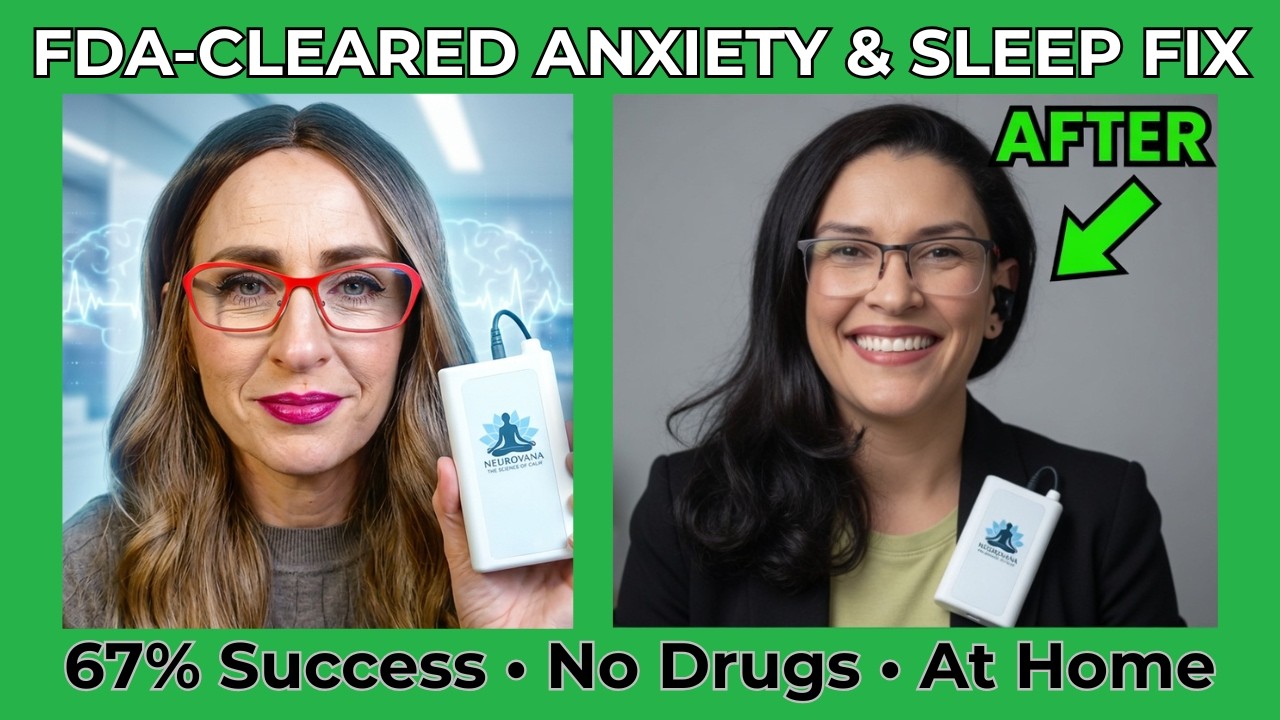
Neurology and psychiatric nurse practitioner Rosabel Zohfeld, NP-C, and Tauna Young, FNP, CEO of NeuroVana Calm, discussed this effective option in a podcast conversation. This article dives deep into the science, real-world outcomes, and practical use of CES for anxiety and insomnia, based on their insights and supporting clinical evidence.
Understanding Cranial Electrotherapy Stimulation (CES)
CES for anxiety and insomnia involves a compact, smartphone-sized medical device that delivers low-amplitude microcurrent pulses through simple ear clip electrodes. Most users experience 20- to 30-minute sessions with little to no sensation—perhaps just mild tingling—or nothing at all. Importantly, CES differs entirely from ECT (which requires anesthesia and induces seizures) or TMS. It is not experimental but a proven, accessible tool cleared by the FDA for these indications.
The Mission Behind NeuroVana Calm
Tauna Young, psychiatric NP, explored CES research after seeing remarkable patient improvements. Despite successfully treating thousands with conventional approaches, she recognized that this option remained largely unknown in the psychiatric community. This realization drove her to found NeuroVana Calm, with the goal of making CES for anxiety and insomnia a mainstream, viable treatment option.
How CES Works: Targeting the Thalamus for Calm
During use, roughly 42-46% of the microcurrent penetrates the skull, primarily influencing the thalamus. This critical brain structure serves as a relay and interpreter for sensory input and plays a major role in regulating emotions, arousal, and sleep-wake cycles.
By delivering frequencies aligned with alpha waves (associated with relaxed alertness), CES essentially flips an “on switch for calm.” Users often enter an awake-but-relaxed state, akin to a meditative or restorative mode. Many describe the experience as life-changing, with benefits that build over consistent use as the brain adopts a new baseline of calm.
External Resource: Review detailed findings on CES brain effects in this PMC study on resting-state connectivity.
Strong Clinical Evidence and Real-World Success Rates
Studies on CES for anxiety and insomnia demonstrate solid results. Using a standard 50% improvement threshold, success rates reach approximately 67%, climbing much higher (around 95%) when measuring any meaningful benefit.
Clinicians report very low return rates for these devices. Even in rare cases where one user sees limited benefit, family members often find value and keep the unit. Personal accounts highlight rapid calm during daytime use or improved sleep when used before bed. Some notice effects immediately, while others experience cumulative benefits after 2–3 weeks of regular sessions.
Notably, CES often matches or exceeds antidepressant success rates (typically 45–55%) without common side effects such as weight gain, sexual dysfunction, or withdrawal symptoms. Its safety profile is excellent, with no serious adverse events reported since FDA clearance in 1979.
Internal Link: Discover additional neurological resources and support here.
CES for Anxiety, Insomnia, and Relevance to Dementia Care
Poor sleep and anxiety worsen many neurological conditions, including dementia. The thalamus helps regulate sleep cycles, and better rest activates the glymphatic system, which clears brain toxins like beta-amyloid and tau proteins associated with Alzheimer’s.
Anecdotal reports, such as reduced stress in a 101-year-old with mild dementia during caregiver absences, suggest potential symptom relief. While CES does not treat dementia itself, it effectively targets associated anxiety, agitation, and insomnia—common challenges in memory care. Its non-drug nature makes it especially appealing for older adults.
Integrating CES into Comprehensive Care Plans
CES for anxiety and insomnia excels as an adjunctive tool alongside therapy, medications, or lifestyle changes. Affordable pricing, FSA/HSA eligibility, and flexible models (purchase, rental, or monitored treatment plans) improve accessibility. Treatment plans often include a loading phase of twice-daily use in the first month, followed by maintenance as the brain adapts.
Practices can implement it sustainably through billable monitoring sessions, delegation to other providers, or nurse visits. Its broad applicability spans psychiatry, neurology, functional medicine, chiropractic care, dentistry (for procedure anxiety), and more.
Safety, Who Can Benefit, and Practical Tips
CES is suitable for adults and children (with appropriate supervision) and features adjustable intensity, including sub-sensory settings. Benefits are cumulative, so consistent early use helps train the brain toward easier access to calm states. Many users continue long-term because the device becomes a reliable part of their wellness routine.
Special offers, such as free prescriptions with code “Rosabel,” are available for audiences seeking to try CES for anxiety and insomnia through NeuroVana Calm.
Backed by Credible Research
- VA systematic review on CES for anxiety and related conditions.
- Open-label study on CES as add-on for late-life generalized anxiety disorder.
- Meta-analysis on CES effectiveness for insomnia.
Consult your healthcare provider to determine if CES fits your needs.
Conclusion: Embrace Better Days and Nights with CES
CES for anxiety and insomnia delivers a science-backed, user-friendly solution that empowers individuals and clinics alike. With strong clinical outcomes, exceptional safety, and convenient home use, it stands as a valuable addition to any mental health or neurological toolkit.
Ready to experience the difference? Explore options at NeuroVana Calm and consult professionals about incorporating cranial electrotherapy stimulation.
Tags: CES for anxiety and insomnia, cranial electrotherapy stimulation, anxiety relief, insomnia treatment, non-invasive therapy, dementia support, NeuroVana Calm, sleep improvement, mental health devices, neurology tools
Understanding Dementia Course: https://rosabelzohfeld.com/understanding-dementia/
Coaching: https://rosabelzohfeld.com/coaching/
Internal Resources: https://rosabelzohfeld.com/rosabelievers/#resources
YouTube Channel: https://www.youtube.com/@rosabelunscripted
To connect with Tauna:
Website: https://neurovanacalm.com
LinkedIn: https://www.linkedin.com/in/tauna-young-/
Facebook: https://www.facebook.com/tauna.young | https://www.facebook.com/profile.php?id=61587978239676
Instagram: https://www.instagram.com/taunayoung_fnpc/ | https://www.instagram.com/taunayoung/ | https://www.instagram.com/neurovanacalm/

Free for new subscribers
Get Module 1 of my dementia course free
Plus my weekly email: one clear, science-based idea for your brain and the people you care for. Unsubscribe anytime.